Alcon AcrySof IQ Lens Implant.
Highest Quality ~ Crisp, Clear, Sharp Distance
Vision.
East Valley Ophthalmology offers the AcrySof IQ intraocular lens implant,
designed to give the majority of cataract surgery patients without astigmatism
the best potential for high quality single-distance vision. The IQ lens
is among the trusted family of Alcon AcrySof intraocular lens implants that
are some of the most widely used for cataract surgery, with more than
30 million implanted worldwide. We invite you to make an appointment and learn more: 480-981-6111. AcrySof IQ Lens Implant
The AcrySof IQ lens is designed to enhance contrast sensitivity, reduce
spherical aberration, and improve functional vision. The AcrySof IQ
lens offers these advantages over traditional intraocular lens implants:
| |
- Reduction of spherical aberration.
- Enhanced quality of vision.
- Improved contrast sensitivity.
- Filtered blue light protection.
- Rich, vibrant color perception.
|
The IQ lens is ideal for patients who wish to be corrected for distance
vision and are comfortable wearing glasses. Because this lens does not
offer the ability to accommodate or adjust one's focus at varying distances,
glasses would still be required for near and intermediate tasks.
The AcrySof IQ intraocular lens implant is also an excellent choice
for those who enjoy driving at night, as it delivers great clarity
with minimal reports of glare or haloes under reduced lighting conditions.
Spherical Aberration.
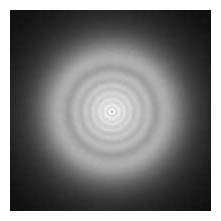
Even healthy eyes contain optical imperfections known as higher
order aberrations (click link to view). Spherical aberration is one type of higher order
aberration common to almost everyone, becoming more an issue as
the natural lens inside the eye becomes thicker and cloudy with
advancing age. This thickening and clouding may lead to a change
in the optical characteristics of the natural lens, resulting in glare,
halos and decreased contrast sensitivity. Symptoms of increased spherical
aberration are:
- Glare and halos
- Blurriness
- Multiple images
|
- Loss of contrast sensitivity
- Poor night
vision
- Decreased functional vision
|
The AcrySof IQ has an aspheric design that counteracts the naturally occurring
spherical aberration of the cornea. This helps to bring light rays into
a single, ideal focal point, resulting in improved clarity by reducing
the optical blurring caused by spherical aberration.
Improved Functional Vision
One of the most important benefits of the IQ Lens
is improved functional vision. With compromised functional
vision, even patients who have no problem reading the
letters on an eye chart can be at a visual disadvantage.
The visual quality of an optical system, such as the human eye,
is determined its ability to faithfully transmit the characteristics
of an object to its image with both clarity (resolution) and contrast
(the ability to tell the difference between closely spaced items
of similar color and hue).
For example, one only has to think of
an old black and white TV from the 1950s for an example of a low
quality image in which the clarity was poor (low resolution) and
items of similar intensity seemed to run together (lack of contrast).
Now compare that to the modern plasma screen TV you may have recently
seen at a local electronics store. Of course, the imaged looked
magnificent because both the resolution and especially
the contrast were spectacular. In optics, the ability of an optical
system to transfer an object's contrast to its image is measured
by what is known as the modulation transfer
function (click link to learn more).
The optical science behind the AcrySof IQ lens is to increase
the modulation transfer function of the human eye. This can be
seen by a clinically significant improvement in night driving under
test conditions that simulated city and rural settings under normal,
glare, and fog conditions. In these tests, the IQ lens resulted
in functionally better vision under 34 of 36 conditions tested.
Visual performance was greatest for the detection and identification
of city pedestrians and rural warning signs under glare and fog
conditions. The improved functional vision with the AcrySof IQ
lens gave drivers time to take appropriate action. UV Blue Light Protection
In addition to its refractive role, the natural lens
inside your eye is also responsible for filtering high-energy
blue light commonly found within the sun's rays and
some artificial lighting. As part of the aging process,
your natural lens gradually turns yellow and it is
thought that this change in color may help to protect
the aging retina by filtering more of the these harmful
wavelengths.
When your natural lens is removed during cataract surgery, the
eye loses this ability to filter blue light. Without something
to replace its natural filtering ability, the eye becomes vulnerable
to the effects of these shorter, energetic wavelengths. Some researchers
believe that overexposure to blue light may be harmful to the retina
and may increase the risk of ocular melanoma and contribute to
the development of macular degeneration and a loss of vision.
Most available intraocular lens implants filter UV light only,
which means that a cataract surgery patient receiving one of those
implants is left vulnerable to the transmission of these harmful
wavelengths of blue light. The AcrySof IQ lens implant is unique
in its ability to filter blue light, having a patented yellow tint
that filters this potentially harmful wavelength of blue light.
The light yellow color of the IQ lens is very similar to that
of your natural lens and is necessary to filter blue light, yet
the IQ lens does not alter the natural colors of the things you
see or change the quality of your vision. In fact, results of a
recent study show equal or better color perception for patients
implanted with the AcrySof IQ lens as compared to the same lens
without the light yellow color.
Improved Contrast Sensitivity
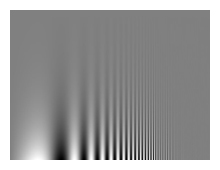
Contrast sensitivity is the ability to see objects
that may not stand out from their background. This
would be perceived as an ability to differentiate between
shades of gray in closely spaced images (as seen in
the chart at the right).
The ability to see a shade of gray on a white background or to
see white on a light gray background declines with age. Cataracts,
in particular, can affect contrast sensitivity.
Low contrast sensitivity
may affect:
- Seeing traffic lights, or cars at night
- Noticing spots, or dirt on clothes, counters, or
dishes
- Understanding facial gestures and subtleties of
expression
- Seeing whether a flame is burning on a stove
- The amount of light necessary to read
- Experiencing
"tired eyes" while watching television
A person with early cataracts may test well on a black
letter, white background visual acuity chart, but may
still experience problems with reduced contrast sensitivity.
Clinical studies using the AcrySof IQ lens have shown
a significant improvement in contrast sensitivity over
a control clear lens.
Advantages of the AcrySof IQ Lens Implant
- The AcrySof IQ intraocular lens is designed to
correct for nearsightedness or farsightedness and
reduce the normally occurring spherical aberration
of the human eye.
- The AcrySof IQ intraocular lens is designed to
have the lens capsule “shrink wrap” around
it. This helps the lens remain stable and centered
within the eye.
- The patented yellow color of the AcrySof IQ intraocular
lens is biocompatible and bonded to the structure
of the acrylic material.
- The yellow color of the AcrySof IQ intraocular
lens, approximates the natural discoloration (i.e.,
natural yellowing) of a healthy adult crystalline
lens, without a negative impact on color perception.
- Contrast sensitivity and night driving are improved
after implantation of the yellow-tinted AcrySof IQ
intraocular lens.
- The AcrySof IQ intraocular lens is compatible with secondary
cataract treatment, known as a Nd:YAG laser posterior capsulotomy,
if required.
The AcrySof IQ lens is available in a wide range of optical
powers that effectively correct eyes that are nearsighted
and farsighted. As each patient is unique, both in physiology
and in viewing distance preferences, the correct power
intraocular lens for your cataract surgery will be selected
using state-of-the-art biometry equipment. An in-depth
discussion of your needs and options will take place
with your eye surgeon at East Valley Ophthalmology.
The eye specialists of East Valley Ophthalmology perform advanced
technology diagnostic testing and treatment, as well as taking
the time necessary to provide each patient with information needed
to fully understand their condition and to achieve their best possible
visual outcome.
If you would like further information, please call our office at:
480-981-6111
East Valley Ophthalmology
Eye Doctors - Mesa, ArizonaIf you or a family member
or friend have not had a recent routine eye examination, have a specific eye condition that needs addressing, or are looking for
an eye specialist or professional eye consultant please take a moment to Request an Appointment.
|