Unlike many other eye diseases, conditions, or problems, glaucoma typically begins without any noticeable symptoms or loss of vision. Early detection of glaucoma is critical.
What is the best treatment for glaucoma?
Glaucoma can be treated with eye drops, pills, laser surgery, traditional eye surgery, implants, or a combination of these methods. The key to success, however, lies in prevention. Specifically, the earlier glaucoma can be diagnosed, the more effective the treatment will be through either medication or laser.
Can glaucoma be stopped?
As a rule, damage caused by glaucoma cannot be reversed. Proper treatment can keep the pressure within normal range and therefore prevent or retard further nerve damage and visual loss. The goal in managing glaucoma is to reduce the pressure inside the eye to the point where the remaining healthy nerve fibers can receive proper nourishment and maintain their function.
Prescription eye drops are used to lower the pressure inside the eye for all types of glaucoma. These medications are used to prevent damage to the optic nerve by decreasing eye pressure, either by slowing the production of aqueous fluid within the eye or by improving the outflow of fluid from the eye.
Open-angle glaucoma is usually controlled with medicated eye drops taken several times a day, sometimes in combination with pills. There are many types of eye drops available that can lower the intraocular pressure. Your specialist will prescribe the correct eye drops for your condition. By using a single type of medication or, in some cases, two eye drops in combination, more than 80% of patients with open-angle glaucoma can be successfully treated.
One or more types of eye drops may need to be administered several times a day to be effective. Recently, several new medications have shown great promise for treating conditions more effectively than others. Be sure your pharmacist fills your prescription exactly as ordered, as substitutions may not be as effective. For these medications to be effective, you must take them regularly and consistently as prescribed. The vital key to the success of medication therapy is patient compliance.
Some patients experience side effects from using glaucoma eye drops, which makes the use of eye drops a poor treatment option. Some patients are unable to achieve adequate control with eye drops alone and require laser treatment in addition to maintain control.
The laser is usually used in one of two ways:
Open-angle glaucoma: Treatment for open-angle glaucoma typically involves the drainage of fluid. In open-angle glaucoma, the laser is used to enlarge the drain (argon laser trabeculoplasty) to help control eye pressure.
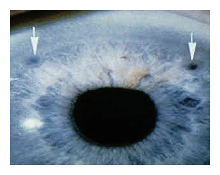
Closed-angle glaucoma: In closed-angle glaucoma (angle-closure glaucoma), the laser creates a hole in the iris (iridotomy) to improve the flow of aqueous fluid to the drain.
Fortunately, technology has improved significantly for both the medication and laser treatment alternatives in glaucoma, so that only a very few individuals ever need to progress to the point of needing surgery. For a small number of patients, however, it is not possible to achieve reasonable stable control and stop the progression of glaucoma with eye drops, pills, or laser trabeculoplasty.
For these glaucoma patients, trabeculectomy is the most common surgical procedure performed. A trabeculectomy creates a “controlled” leak of fluid from the eye by removing a tiny piece of the trabecular meshwork to form a hole, or even implanting a microscopic glaucoma valve that can help reduce and stabilize the intraocular pressure and prevent vision loss.
The surgically created hole forms a small, blister-like bump called a bleb. The bleb is typically placed on the upper surface of the eye, covered by the eyelid, and is usually not visible. After surgery, the bleb may cause fitting problems for contact lens wearers, and special care will be necessary to prevent bleb infection. Contact lens users should discuss these challenges with their eye doctor.
Glaucoma surgery recovery time is longer than that of the laser procedure. Typically, recovery requires two to four weeks. It may take up to two months for your glaucoma surgery results to become apparent and vision to stabilize. There may be some vision changes, such as blurred vision, for about six weeks after the surgery.
The appearance of your eye after surgery will likely be red and irritated, and you may experience increased tearing or watering.
Patients are advised to keep their eyes closed for at least one week after surgery. It is essential to avoid putting unnecessary stress or strain on your eyes, such as driving, bending, and doing any heavy lifting. Each patient is unique, so please consult with your glaucoma specialist for specific advice.
Most of the related studies document follow-up for one year. In those reports, it is shown that in older patients, glaucoma filtering surgery is successful in approximately 70-90% of cases for at least one year. Occasionally, the surgically created drainage hole begins to close, and the pressure rises again. This happens because the body tries to heal the new opening in the eye, as if it were an injury. This rapid healing occurs most often in younger individuals because they have a more robust healing system. Anti-wound healing drugs, such as mitomycin-C and 5-FU, help slow down the healing process of the wound opening. If necessary, glaucoma filtering surgery can be performed multiple times in the same eye.
If other methods fail to control your glaucoma, your doctor may suggest drainage implants, also known as “aqueous shunts” or “glaucoma drainage devices.” Glaucoma drainage implants are small prosthetic devices placed to help lower intraocular pressure and prevent further optic nerve damage.
The idea behind implants is to enhance standard glaucoma surgery by positioning a device that helps keep the surgically created drainage opening from healing and closing. Many current implants include a tube through which the aqueous fluid passes. Others are solid and promote the flow of fluid along the implant’s surface. Regardless of the type, all implants share a common goal: to decrease IOP by increasing the outflow of fluid from your eye.
Studies have shown that the success of glaucoma drainage implants is similar to that of trabeculectomy. It should be noted that glaucoma implants are sometimes used in patients with more complicated conditions. Therefore, the success rate in these patients may be lower than that of trabeculectomy in a standard eye. In many patients, however, these implants may be the best remaining available option. In approximately 5-10% of cases, a second tube implant is necessary to control intraocular pressure adequately. When a second tube is required, it is usually placed in the lower part of the eye under the lower eyelid.
It may take several months after your surgery for the healing to be complete and for the implant to mature in your eye. During this time, it is not unusual for your intraocular pressure, as well as your vision, to fluctuate. You will be ready to change your glasses prescription approximately 2 to 3 months after surgery.
Each type of treatment has its benefits and potential complications. At East Valley Ophthalmology, our physicians will review them with you in detail and address all your questions and concerns.


 Closed-angle glaucoma: In closed-angle glaucoma (angle-closure glaucoma), the laser creates a hole in the iris (iridotomy) to improve the flow of aqueous fluid to the drain.
