What is Dry Eye Syndrome?
Dry Eye Syndrome, medically known as Keratoconjunctivitis Sicca, occurs when the eye’s conjunctiva and cornea experience dryness due to insufficient tear production or rapid tear evaporation.
- Conjunctiva: The membrane that lines the eyelids and covers the white of the eye.
- Cornea: The transparent layer at the front of the eye that protects the iris and pupil.
Why Are My Eyes Dry?
Some people either produce an insufficient amount or the wrong quality of tears, which are vital for maintaining eye health and comfort. Tear production occurs through two main mechanisms:
- Basal Production: This steady, ongoing tear production ensures constant eye lubrication.
- Reflex Tearing: This is triggered by irritants or emotional stimuli, producing large amounts of tears for a brief period.
When tears that normally lubricate the eyes are lacking, irritation occurs, triggering excessive reflex tearing, which can overflow as “watery” eyes.
Symptoms of Dry Eye
Common symptoms of dry eye include:
- Stinging or burning sensations
- A gritty or scratchy feeling
- Stringy mucus around the eyes
- Heightened sensitivity to smoke or wind
- Tearing in response to dryness
- Discomfort when wearing contact lenses
Although it may seem contradictory, excessive tearing can be a sign of dry eye, as inadequate baseline tears lead to irritation, which then stimulates the production of excess tears.
What Causes Dry Eye?
As we age, tear production naturally declines. Women, especially post-menopause, are more prone to dry eye due to hormonal changes. Dry eye can also be associated with systemic conditions like Sjögren’s syndrome (characterized by dry eyes, dry mouth, and arthritis).
Certain medications, including diuretics, beta-blockers, antihistamines, sedatives, and pain relievers, can also decrease tear production. Always inform your ophthalmologist of all medicines you’re taking, as some may exacerbate dry eye.
People with dry eyes are more susceptible to side effects from eye medications, including artificial tears with preservatives, which can irritate. Special preservative-free formulations may be necessary.
What is the Tear Film?
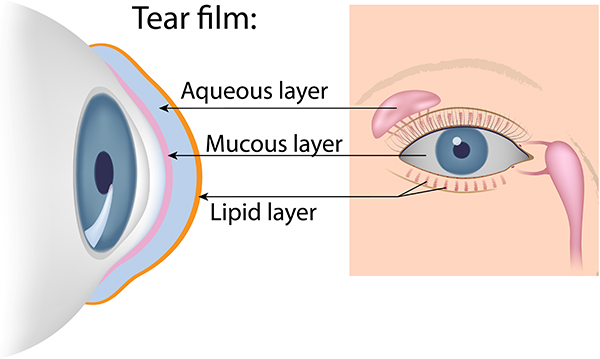
The tear film is a vital layer that coats the eye, creating a smooth optical surface for clear vision. It consists of three layers:
- Oily Layer: Produced by the meibomian glands, this outermost layer smooths the tear surface and reduces evaporation.
- Watery Layer: The middle layer, produced by the lacrimal gland, is what we typically think of as “tears.” It washes away debris and irritants.
- Mucus Layer: The innermost layer, produced by the conjunctiva, helps the watery layer spread evenly across the eye. Without this mucus, tears would not adhere properly to the surface of the eye.
How is Dry Eye Diagnosed?
Diagnosing dry eye typically involves a comprehensive eye examination. Tests may include:
- Schirmer Test: Measures tear production by placing filter paper strips under the lower eyelids.
- Staining Tests: Fluorescein or rose bengal drops are used to reveal patterns of dryness or damage on the eye’s surface.
How is Dry Eye Treated?
- Adding Tears: Artificial tears, which mimic natural tears, are available over-the-counter. Patients can experiment with different brands to find the most comfortable option for them. If you need to use artificial tears more frequently than every two hours, consider using preservative-free options to minimize irritation.
- Conserving Tears: By blocking the tear drainage channels with punctal plugs, natural tears are retained on the eye surface for extended periods, providing more sustained relief.
- Preventing Evaporation: Using a humidifier, wearing wraparound glasses to shield from wind, and avoiding overly warm or dry environments can reduce tear evaporation. Smoking is especially drying and should be avoided by those with dry eye.
- Special Ointments: At night, using an artificial tear ointment can help alleviate dryness that occurs during sleep. Use sparingly, as ointments can temporarily blur vision.
- Vitamin A Supplements: Though rare in the United States, vitamin A deficiency can lead to dry eye. For certain conditions, such as Stevens-Johnson syndrome, vitamin A ointments can be beneficial.
Call our office today to schedule a consultation or learn more about our services. Don’t let vision problems hold you back—trust the experts at East Valley Ophthalmology to restore your sight and improve your quality of life. Please feel free to contact us at 480-981-6111.