About Blepharoplasty

What is blepharoplasty?

Blepharoplasty (BLEF-uh-roe-plas-tee) is the name for cosmetic eyelid surgery, or plastic surgery for the eyelids. The word blepharoplasty comes from the Greek words blepharon, meaning “eyelid,” and plassein, meaning “to form.”

The roots of blepharoplasty date back around 3000 years to the ancient Egyptians. However, modern cosmetic eyelid surgery was described less than a century ago and has been practiced with only minor refinements since then. Many cosmetic surgeons still employ “classic” upper and lower blepharoplasty based upon concepts developed during World War I.  While such surgery may yield a noticeable difference, it often leaves the face and lids looking harsh, hollowed, or unnatural. It may lead to later undesirable signs and symptoms, even accelerating the very changes for which eyelid lift was first sought.

The day when cosmetic blepharoplasty entailed little more than the removal of skin and fat is gone, as is the need to settle for a lower standard of aesthetic excellence. In the skilled hands of Dr. Nirenberg, drooping upper and puffy lower eyelids are contoured, augmented, reinforced, and resurfaced to achieve a significantly more natural, youthful, attractive, and long-term safe result.

What can blepharoplasty treat?

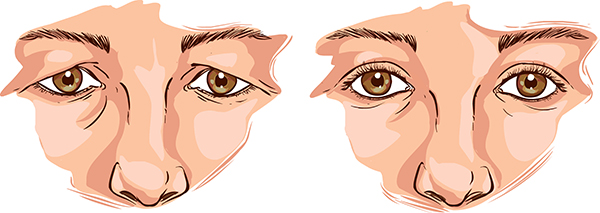
  • Loose or sagging skin that creates folds or disturbs the natural contour of the upper eyelid, sometimes impairing vision
  • Fatty deposits that appear as puffiness in the eyelids
  • Bags under the eyes
  • Drooping lower eyelids that reveal white below the iris
  • Excess skin and fine wrinkles of the lower eyelid
The best candidates for eyelid surgery are individuals who are physically healthy, psychologically stable, and realistic in their expectations. Most are 35 or older, but if droopy, baggy eyelids run in your family, you may decide to have eyelid surgery at a younger age.

A few medical conditions make blepharoplasty more risky. They include thyroid problems such as hypothyroidism and Graves’ disease, dry eye or lack of sufficient tears, high blood pressure or other circulatory disorders, cardiovascular disease, and diabetes. A detached retina or glaucoma is also a reason for caution.

  • When a qualified surgeon performs eyelid surgery, complications are infrequent and usually minor. Nevertheless, there is always a possibility of complications, including infection or a reaction to the anesthesia. You can reduce your risks by closely following Dr. Nirenberg’s instructions both before and after surgery.
  • The minor complications that occasionally follow blepharoplasty include double or blurred vision for a few days, temporary swelling at the corner of the eyelids, and a slight asymmetry in healing or scarring. Tiny whiteheads may appear after your stitches are taken out. Dr. Nirenberg would remove these easily with a small needle, or they would most likely resolve on their own.
  • Following surgery, some patients may have difficulty closing their eyes when they sleep; in sporadic cases, this condition may be permanent. Ectropion is a rare condition in which the lower eyelids pull outward. In this case, further surgery may be required.
  • The initial consultation with Dr. Nirenberg is essential. He will need your complete medical history, so check your own records ahead of time and arrive prepared to provide this information. You may come prepared by downloading New Patient Forms to complete and bring with you, or
    • FAX to our office at 480-985-2426.
  • Be sure to inform Dr. Nirenberg if you have any allergies; if you are taking any vitamins, medications (prescription or over-the-counter), or other drugs; and if you smoke.
  • During this consultation, your vision will be tested, and an assessment will be made of your tear production. You should also provide any relevant information from any previous ophthalmologist or records of your most recent eye exam, if not already in our office. If you wear glasses or contact lenses, please bring them with you.
  • You and Dr. Nirenberg will carefully discuss your goals and expectations for this surgery. You’ll need to discuss whether to do all four eyelids or just the upper or lower ones, whether skin as well as fat will be removed, and whether any additional procedures are appropriate.
  • Dr. Nirenberg will explain the techniques and anesthesia he will use, where the surgery will be performed, and the associated risks and costs. (Note: Most insurance policies don’t cover eyelid surgery, unless drooping upper lids interfere with your vision. Check with your insurer.)
  • Be sure to ask Dr. Nirenberg any questions you may have, especially those regarding your expectations and concerns about the results.
  • Dr. Nirenberg will provide you with instructions on how to prepare for surgery, including guidelines on eating and drinking, smoking, and taking or avoiding specific vitamins and medications. Carefully follow these instructions.
  • While you’re making preparations, be sure to arrange for someone to drive you home after your surgery. You also may need some help at home for a few days.
  • Your eyelid surgery will be performed in an outpatient surgery center. It’s usually done on an outpatient basis; it rarely requires an inpatient stay.
  • Blepharoplasty usually takes one to three hours, depending on the extent of the surgery. If you’re having all four eyelids done, Dr. Nirenberg will probably work on the upper lids first, then the lower ones.
  • In a typical procedure, Dr. Nirenberg makes incisions following the natural lines of your eyelids, in the creases of your upper lids, and just below the lashes in the lower lids. The incisions may extend into the crow’s feet or laugh lines at the outer corners of your eyes. Working through these incisions, Dr. Nirenberg separates the skin from underlying fatty tissue and muscle, removes excess fat, and often trims sagging skin and muscle. The incisions are then closed with tiny sutures.
  • If you have a pocket of fat beneath your lower eyelids but don’t need to have any skin removed, your surgeon may perform a transconjunctival blepharoplasty. In this procedure, the incision is made inside your lower eyelid, leaving no visible scar. It is usually performed on younger patients with thicker, more elastic skin.
  • After surgery, Dr. Nirenberg will lubricate your eyes with ointment and may apply a bandage to protect them. Your eyelids may feel tight and sore as the anesthesia wears off, but you can usually control any discomfort with Extra Strength Tylenol. If you experience severe pain, please call Dr. Nirenberg immediately.
  • Dr. Nirenberg will instruct you to keep your head elevated for several days and to use cold compresses to reduce swelling and bruising. (Bruising varies from person to person: it reaches its peak during the first week, and generally lasts anywhere from two weeks to a month.) You’ll be shown how to clean your eyes, which may be gummy for a week or so. You may be prescribed eye drops, since your eyelids may feel dry at first and your eyes may burn or itch. For the first few weeks, you may also experience excessive tearing, sensitivity to light, and temporary changes in your eyesight, such as blurring or double vision.
  • Dr. Nirenberg will closely monitor your progress during the first week or two. The stitches will be removed five to ten days after surgery. Once they’re out, the swelling and discoloration around your eyes will gradually subside, and you’ll start to look and feel much better.
  • You should be able to read or watch television after two or three days. However, you won’t be able to wear contact lenses for about two weeks, and even then, they may feel uncomfortable for a while.
  • Most people feel ready to go out in public (and back to work) in a week to 10 days. By then, depending on your rate of healing and Dr. Nirenberg’s instructions, you’ll probably be able to wear makeup to hide the bruising that remains. You may be sensitive to sunlight, wind, and other irritants for several weeks, so it’s recommended to wear sunglasses and a specialized sunblock designed for the eyelids when you go out.
  • Dr. Nirenberg will instruct you to keep your activities to a minimum for three to five days and to avoid more strenuous activities for about three weeks. It’s essential to avoid activities that raise your blood pressure, such as bending, lifting, and participating in rigorous sports. You may also be told to avoid alcohol, since it causes fluid retention.
  • Healing is a gradual process, and your scars may remain slightly pink for six months or more after surgery. Most patients report that these fade rather quickly to a thin, nearly invisible line, easily mistaken for a natural eyelid crease. Your eyelid surgery will help you attain a more alert and youthful look that will last for years. For many people, these results are permanent.

At East Valley Ophthalmology, our mission is to balance modern, cutting-edge technology with the warmth and individual attention for which we have always been known. Regarding cosmetic eyelid surgery, our goal is to help and enhance the natural beauty of our patients, while always avoiding any results that might appear artificial. In the hands of Dr. Nirenberg, eyelid surgery is truly a marriage of classic art and modern science.

Blepharoplasty - Eyelid Plastic Surgery

Time for a yearly eye exam?

How important are routine eye exams? If you just passed a “vision screening” — do you still need a comprehensive eye exam?